Español
 Português
 لالعربية
 Русский
 Bahasa Indonesia
 Français
 Türkçe
 Bahasa Melayu


ADSS-D Fiber Optic Cable | Double Jacket | 2–288 Cores | G.652D/G.655 | Outdoor Aerial Self-Supporting
All-insulated material: non-metallic, highly insulating, and resistant to electrical corrosion.
Laminated structure: inner sheath, aramid armor, outer sheath resistant to electrical tracking (AT/PE optional).
High tensile strength: aramid reinforced, maximum span up to 1000+ meters.
Strong environmental adaptability: resistant to low temperatures, wind-induced vibration, with ice-covered elongation rate of 0.6%.
Pressure resistance and lightning protection: AT sheath withstands 500kV, surface voltage controllable.
No electromagnetic interference: fully insulated structure, can be installed on the same tower as high-voltage lines.
Independent installation: no power outage required, directly utilizes tower resources.
Maintenance-free: UV-resistant, impact-resistant (10-meter sandblasting without failure), long service life.
Application scenarios: PE sheath for below 110kV, AT sheath for above; suitable for complex terrains such as mountains and river crossings.
what is an adss-d Fiber optic cable
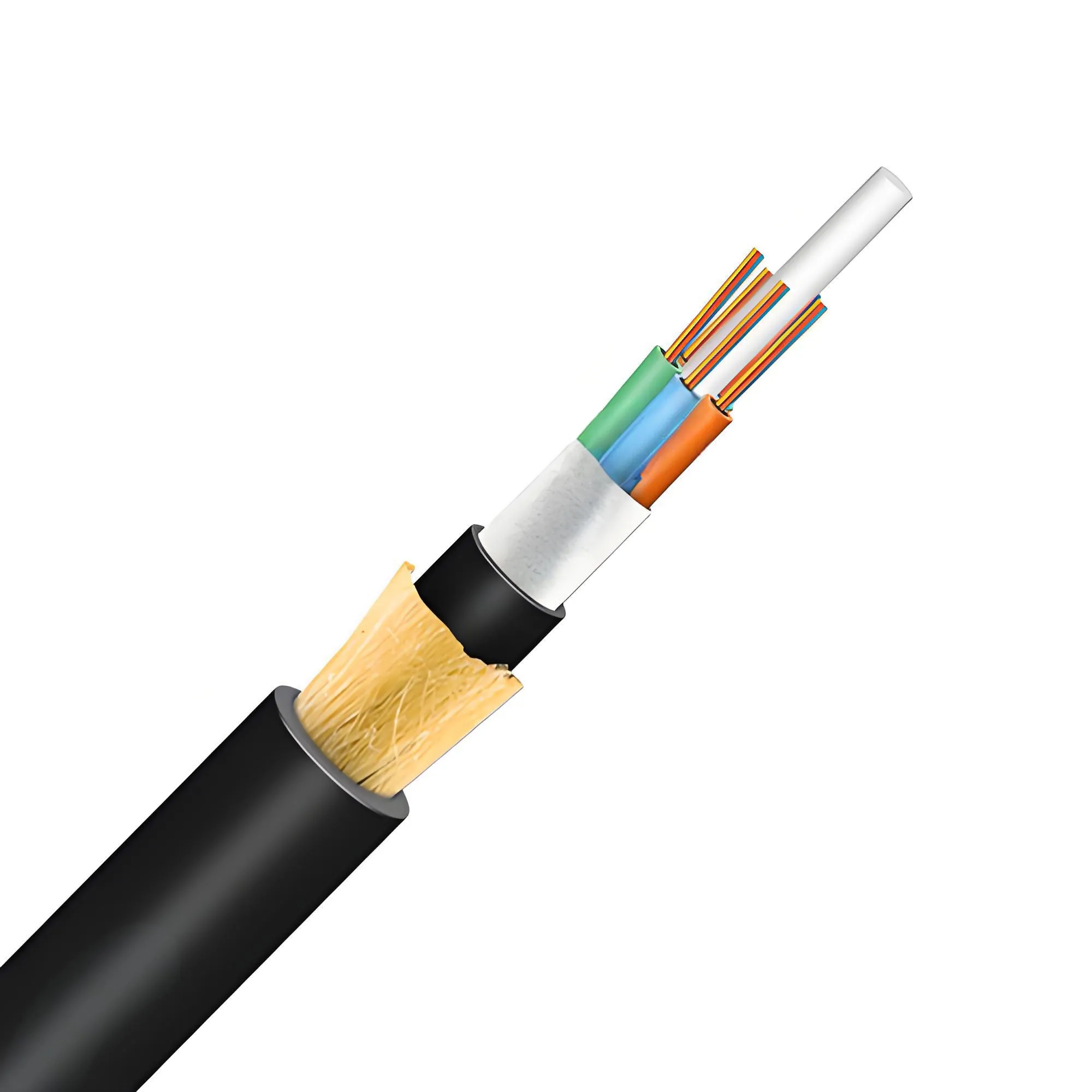
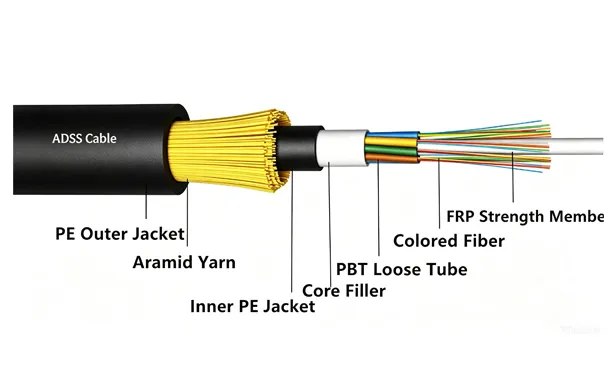
ADSS-D fiber optic cable is a type of all-dielectric self-supporting cable constructed with loose tube stranded fibers (250μm) placed into high-modulus plastic tubes filled with water-resistant compound. The tubes and fillers are stranded around a non-metallic FRP strength member to form a compact circular core, which is then filled with filling compound, covered with a PE inner sheath, followed by a stranded layer of aramid yarns as the primary strength member, and finally completed with a PE or AT (anti-tracking) outer sheath. This design features high tensile strength, no electromagnetic interference, high voltage resistance (AT sheath up to 500kV), and maintenance-free characteristics, making it suitable for communication in high-voltage power grids and complex terrains such as mountains and river crossings.
ADSS-D Fiber Optic Cable Specification
- Specification
- Product Technical Parameters
- OPTICAL CHARACTERISTICS
optical properties
| G.652 | G.655 | 50/125μm | 62.5/125μm | |
|---|---|---|---|---|
| Attenuation (+20℃) | ≤3.0 dB/km @850nm | ≤3.0 dB/km @850nm | ||
| ≤1.0 dB/km @1300nm | ≤1.0 dB/km @1300nm | |||
| ≤0.36 dB/km @1310nm | ≤0.40 dB/km @1310nm | |||
| ≤0.22 dB/km @1550nm | ≤0.23 dB/km @1550nm | |||
| Bandwidth (Class A) | ≥500 MHz·km @850nm | ≥200 MHz·km @850nm | ||
| ≥1000 MHz·km @1300nm | ≥600 MHz·km @1300nm | |||
| Numerical Aperture | 0.200±0.015NA | 0.275±0.015NA | ||
| Cable Cut-off Wavelength | ≤1260nm | ≤1480nm | ||
| Storage/Operating temperature | -40℃ ~ +70℃ | |||
Technical parameters
| Out Diameter (mm) | Fiber cores | Daily max working tension (KN) | Max working tension (KN) | Break Strength (KN) | Strength Member CSA (mm²) | Modulus of Elasticity NK/mm² | Heat Expansion Coefficient (x10⁻⁸/K) | Suitable Span (m) | ||||
|---|---|---|---|---|---|---|---|---|---|---|---|---|
| PE sheath | AT sheath | A | B | C | D | |||||||
| 12.5 | 125 | 136 | 1.5 | 4 | 10 | 4.6 | 7.6 | 1.8 | 160 | 100 | 140 | 100 |
| 13.0 | 132 | 142 | 2.25 | 6 | 15 | 7.6 | 8.3 | 1.5 | 230 | 150 | 200 | 150 |
| 13.3 | 137 | 148 | 3.0 | 8 | 20 | 10.35 | 9.45 | 1.3 | 300 | 200 | 290 | 200 |
| 13.6 | 145 | 156 | 3.6 | 10 | 24 | 13.8 | 10.8 | 1.2 | 370 | 250 | 350 | 250 |
| 13.8 | 147 | 159 | 4.5 | 12 | 30 | 14.3 | 11.8 | 1.0 | 420 | 290 | 400 | 280 |
| 14.5 | 164 | 177 | 5.4 | 15 | 36 | 18.4 | 13.6 | 0.9 | 480 | 320 | 460 | 320 |
| 15.1 | 179 | 193 | 7.95 | 22 | 53 | 26.4 | 18 | 0.3 | 670 | 460 | 650 | 460 |
| 15.6 | 194 | 208 | 10.5 | 28 | 70 | 33 | 19.6 | 0.1 | 800 | 560 | 800 | 560 |
optical properties
| G.652 | G.655 | 50/125μm | 62.5/125μm | |
|---|---|---|---|---|
| Attenuation (+20℃) | ≤3.0 dB/km @850nm | ≤3.0 dB/km @850nm | ||
| ≤1.0 dB/km @1300nm | ≤1.0 dB/km @1300nm | |||
| ≤0.36 dB/km @1310nm | ≤0.40 dB/km @1310nm | |||
| ≤0.22 dB/km @1550nm | ≤0.23 dB/km @1550nm | |||
| Bandwidth (Class A) | ≥500 MHz·km @850nm | ≥200 MHz·km @850nm | ||
| ≥1000 MHz·km @1300nm | ≥600 MHz·km @1300nm | |||
| Numerical Aperture | 0.200±0.015NA | 0.275±0.015NA | ||
| Cable Cut-off Wavelength | ≤1260nm | ≤1480nm | ||
| Storage/Operating temperature | -40℃ ~ +70℃ | |||
Technical parameters
| Out Diameter (mm) | Fiber cores | Daily max working tension (KN) | Max working tension (KN) | Break Strength (KN) | Strength Member CSA (mm²) | Modulus of Elasticity NK/mm² | Heat Expansion Coefficient (x10⁻⁸/K) | Suitable Span (m) | ||||
|---|---|---|---|---|---|---|---|---|---|---|---|---|
| PE sheath | AT sheath | A | B | C | D | |||||||
| 12.5 | 125 | 136 | 1.5 | 4 | 10 | 4.6 | 7.6 | 1.8 | 160 | 100 | 140 | 100 |
| 13.0 | 132 | 142 | 2.25 | 6 | 15 | 7.6 | 8.3 | 1.5 | 230 | 150 | 200 | 150 |
| 13.3 | 137 | 148 | 3.0 | 8 | 20 | 10.35 | 9.45 | 1.3 | 300 | 200 | 290 | 200 |
| 13.6 | 145 | 156 | 3.6 | 10 | 24 | 13.8 | 10.8 | 1.2 | 370 | 250 | 350 | 250 |
| 13.8 | 147 | 159 | 4.5 | 12 | 30 | 14.3 | 11.8 | 1.0 | 420 | 290 | 400 | 280 |
| 14.5 | 164 | 177 | 5.4 | 15 | 36 | 18.4 | 13.6 | 0.9 | 480 | 320 | 460 | 320 |
| 15.1 | 179 | 193 | 7.95 | 22 | 53 | 26.4 | 18 | 0.3 | 670 | 460 | 650 | 460 |
| 15.6 | 194 | 208 | 10.5 | 28 | 70 | 33 | 19.6 | 0.1 | 800 | 560 | 800 | 560 |
optical properties
| G.652 | G.655 | 50/125μm | 62.5/125μm | |
|---|---|---|---|---|
| Attenuation (+20℃) | ≤3.0 dB/km @850nm | ≤3.0 dB/km @850nm | ||
| ≤1.0 dB/km @1300nm | ≤1.0 dB/km @1300nm | |||
| ≤0.36 dB/km @1310nm | ≤0.40 dB/km @1310nm | |||
| ≤0.22 dB/km @1550nm | ≤0.23 dB/km @1550nm | |||
| Bandwidth (Class A) | ≥500 MHz·km @850nm | ≥200 MHz·km @850nm | ||
| ≥1000 MHz·km @1300nm | ≥600 MHz·km @1300nm | |||
| Numerical Aperture | 0.200±0.015NA | 0.275±0.015NA | ||
| Cable Cut-off Wavelength | ≤1260nm | ≤1480nm | ||
| Storage/Operating temperature | -40℃ ~ +70℃ | |||
Technical parameters
| Out Diameter (mm) | Fiber cores | Daily max working tension (KN) | Max working tension (KN) | Break Strength (KN) | Strength Member CSA (mm²) | Modulus of Elasticity NK/mm² | Heat Expansion Coefficient (x10⁻⁸/K) | Suitable Span (m) | ||||
|---|---|---|---|---|---|---|---|---|---|---|---|---|
| PE sheath | AT sheath | A | B | C | D | |||||||
| 12.5 | 125 | 136 | 1.5 | 4 | 10 | 4.6 | 7.6 | 1.8 | 160 | 100 | 140 | 100 |
| 13.0 | 132 | 142 | 2.25 | 6 | 15 | 7.6 | 8.3 | 1.5 | 230 | 150 | 200 | 150 |
| 13.3 | 137 | 148 | 3.0 | 8 | 20 | 10.35 | 9.45 | 1.3 | 300 | 200 | 290 | 200 |
| 13.6 | 145 | 156 | 3.6 | 10 | 24 | 13.8 | 10.8 | 1.2 | 370 | 250 | 350 | 250 |
| 13.8 | 147 | 159 | 4.5 | 12 | 30 | 14.3 | 11.8 | 1.0 | 420 | 290 | 400 | 280 |
| 14.5 | 164 | 177 | 5.4 | 15 | 36 | 18.4 | 13.6 | 0.9 | 480 | 320 | 460 | 320 |
| 15.1 | 179 | 193 | 7.95 | 22 | 53 | 26.4 | 18 | 0.3 | 670 | 460 | 650 | 460 |
| 15.6 | 194 | 208 | 10.5 | 28 | 70 | 33 | 19.6 | 0.1 | 800 | 560 | 800 | 560 |
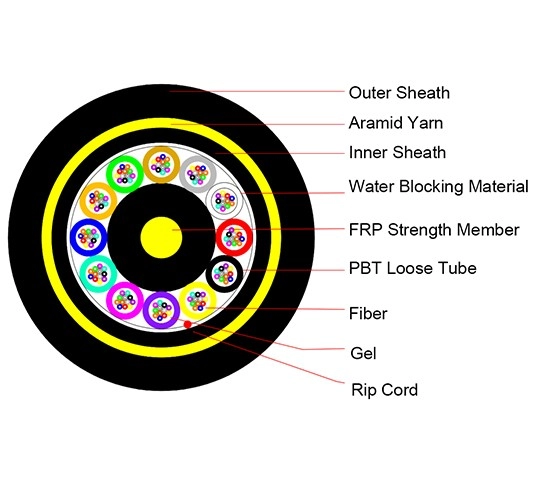
Product Structure & Composition
Outer Sheath – PE or AT (anti-tracking) material, providing environmental and electrical protection.
Aramid Yarn – Non-metallic strength member providing high tensile strength.
Inner Sheath – PE layer over the cable core.
Water Blocking Material – Prevents water ingress along the cable.
FRP Strength Member – Non-metallic central reinforcement (Fiber Reinforced Plastic).
PBT Loose Tube – High modulus polybutylene terephthalate tube containing optical fibers.
Fiber – 250μm optical fibers.
Gel – Water-resistant filling compound inside the loose tube.
Rip Cord – Enables easy sheath removal for termination.
ADSS-D Fiber Optic Cable Product Features
1. All-Dielectric and Electrical Safety
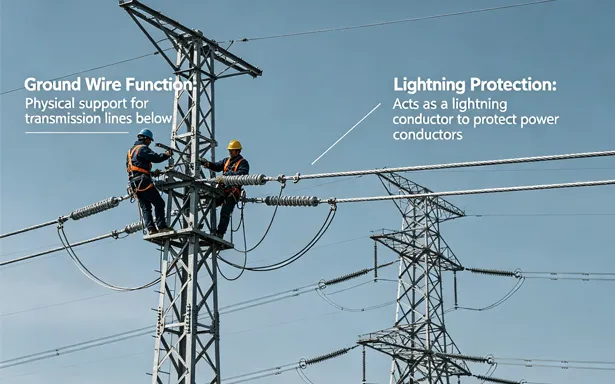
Using a non-metallic, fully insulated structure, it has no electromagnetic interference and can be co-installed on the same tower with high-voltage lines; the AT sheath withstands up to 500kV, providing lightning protection and surface potential control capabilities.
2. High Strength and Environmental Adaptability
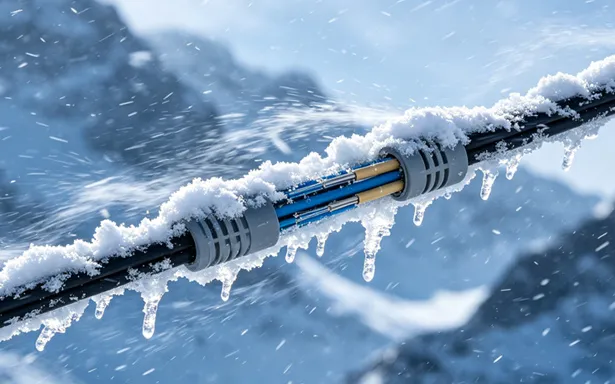
Aramid reinforcement allows a maximum span of up to 1000+ meters, resistant to low temperatures and wind-induced vibrations, with an elongation rate of 0.6% under icing conditions, suitable for harsh climates.
3. Multi-Layer Protective Structure
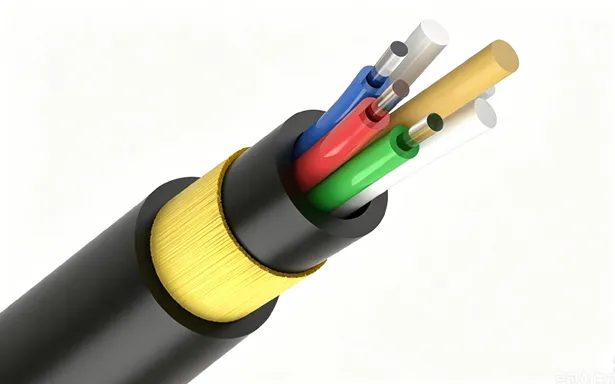
Includes an inner sheath, aramid armor, and a tracking-resistant outer sheath (AT/PE optional), offering excellent mechanical protection and resistance to electrical corrosion.
4. Convenient Construction and Maintenance-Free
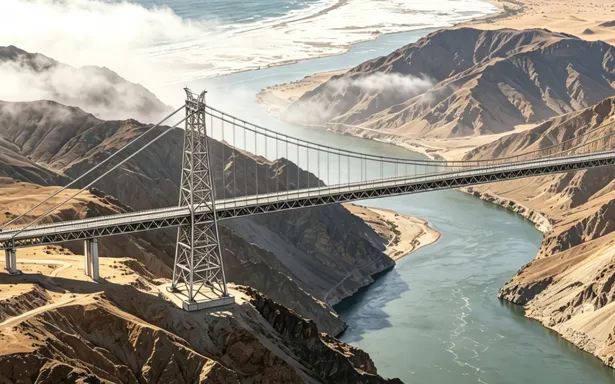
No power outage is required, can be constructed independently using tower resources; UV resistant, impact resistant (operates without fault after 10 meters sand gun test), and long-lasting. PE sheath is suitable for below 110kV, AT sheath for above, suitable for complex terrains such as mountains and river crossings.
Engineering Applications ADSS-D Fiber Optic Cable
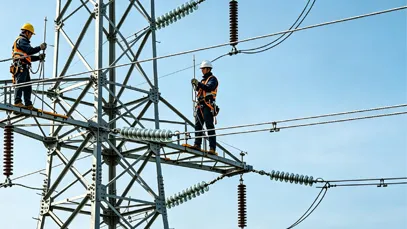
Backbone Communications on 110–500 kV Transmission Lines
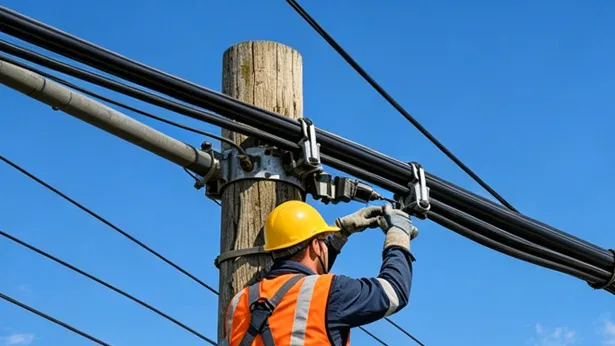
ADSS-D cable is installed directly on existing transmission towers, suspended below ground wires or phase conductors, to form the optical backbone for grid dispatching, line protection, and stability control signals.
Its double-layer anti-tracking jacket withstands dry-band arcing caused by intense electric fields near high-voltage conductors, virtually eliminating jacket erosion and ensuring long-term fiber reliability.
Distribution Automation on 10–35 kV Networks
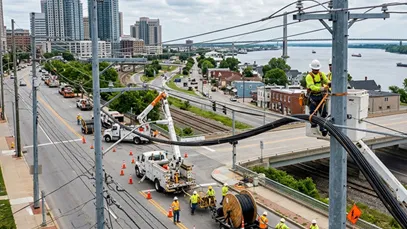
On medium-voltage poles with same-tower multi-circuit configurations and complex electric fields, ADSS-D cable serves as the data aggregation trunk for intelligent breakers, fault indicators, and distribution automation terminals.
The reinforced jacket handles induced fields and intermittent dry-band discharges, maintaining stable communication through heavy pollution and wet weather without tracking damage.
Electrified Railway Trackside Communications
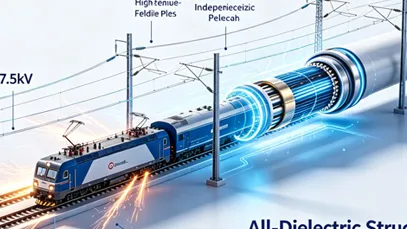
Along electrified railways, ADSS-D cable is attached to catenary masts or independent feeder poles, providing a high-interference-immune digital link for signaling, video surveillance, and disaster prevention systems.
Exposed to 27.5 kV traction supply fields and frequent arcing from pantographs, the all-dielectric, double-jacket construction prevents tracking erosion and eliminates induced-voltage hazards from metallic components.
Long-Span Crossings in Challenging Terrain
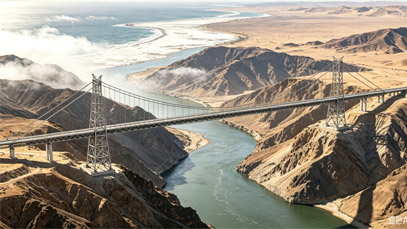
With high-modulus aramid yarn reinforcement and self-supporting design, ADSS-D cable easily achieves unsupported spans of 200 m to over 1000 m across rivers, valleys, or large industrial buildings.
The dual jacket satisfies anti-tracking requirements in high-field zones and near-conductor sections at span ends, ensuring safe operation under combined mechanical and electrical stress and preventing mid-span fiber breaks.
Download YRTFIBER Product Catalog
Shipping & Packaging
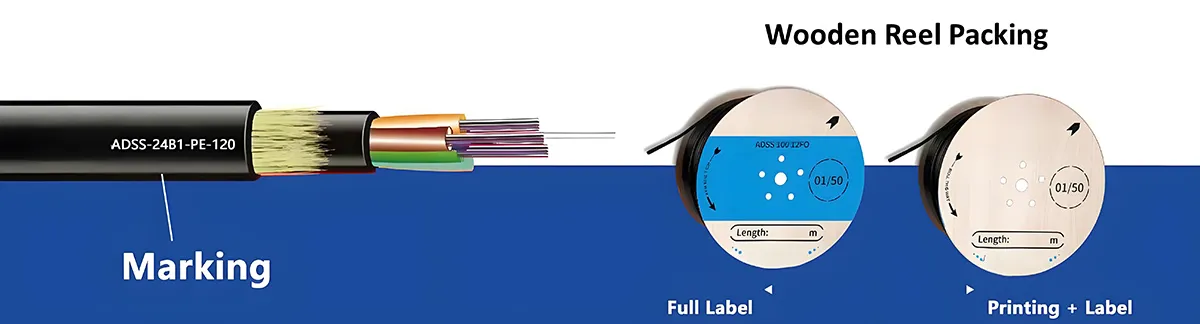
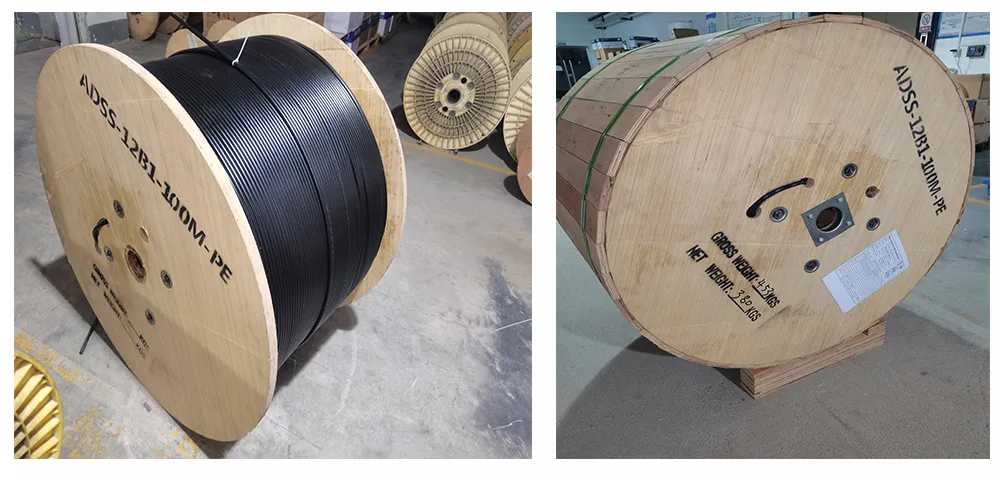
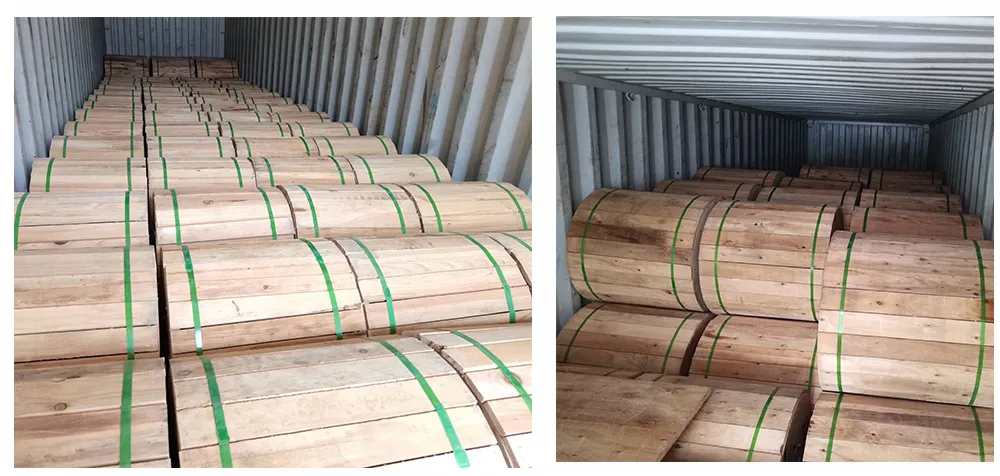
Packaging Requirements:
1:All cables shall be wound on treated wooden spools that are not returnable
2:Cable ends must be firmly secured to the spool and protected with waterproof shrink caps
3:Each spool must include: Protective plastic wrapping layer, Reinforcing wooden slats for stability,Minimum 1m of free cable end for testing purposes, Standard spool length: 3000mm (±2% tolerance allowed)
Cable Identification:
The outer jacket must display:
1、Unique sequential numbering every 1m (±1% variance permitted)
2、 Additional repeating markings at 1m intervals showing: Product code and fiber count, Manufacturer identification,Production date (month/year),Total cable length
Standard Packaging Dimensions:
| Length | Container | Size (L×W×H) | Net Mass | Total Mass |
|---|---|---|---|---|
| 2 km | Wood spool | 90×75×90 cm | 156 kg | 220 kg |
| 3 km | Wood spool | 100×68×100 cm | 240 kg | 280 kg |
| 4 km | Wood spool | 109×75×109 cm | 300 kg | 368 kg |
| 5 km | Wood spool | 129×72×129 cm | 400 kg | 480 kg |
Technical Reference:
1、 Standard cable diameter: 10.0mm
2、Maximum span distance: 100m
3、Contact sales team for complete technical specifications
Spool Marking Standards:
Permanent markings (minimum 25-30mm height) must appear on both sides of each spool:
1、 Company name and trademark
2、Contained cable length
3、Cable specifications (type/fiber count)
4、Winding orientation
5、Weight measurements (gross/net)
Note: All wooden packaging materials must undergo proper fumigation treatment prior to use.
Product Comparison:
ADSS-S (Single Sheath ADSS) VS ADSS-DS (Double Sheath ADSS) VS Figure-8 (Figure-8 Self-Supporting) VS OPGW (Optical Ground Wire)
| Feature / Dimension | ADSS-S | ADSS-DS | Figure-8 (Self-Supporting) | OPGW |
|---|---|---|---|---|
| Laying Distance (Max. span) | 80–150 m (can reach ~200 m with optimization) | 200–400 m (can exceed 1000 m with high aramid content) | 100–500 m (but >300 m may cause excessive sag) | Up to 1000 m+ (very long crossing spans) |
| Structural Features | Single PE/AT (Anti-Tracking) outer sheath; aramid yarn as primary strength member; loose tube gel-filled/filled-free design; all-dielectric (non-metallic). | Double sheath (inner + outer PE/AT); double layer of aramid yarn for enhanced tensile strength; all-dielectric construction with additional mechanical protection. | “8” shaped cross-section with integrated steel messenger wire; metallic core; optical fibers housed separately from supporting steel strand. | Steel/aluminum tube containing optical fibers stranded with Al-clad steel and/or aluminum alloy wires; dual-function: grounding + communication. |
| Typical Applications | Medium voltage (≤110 kV) power lines; short to medium spans (80 m–150 m); urban/rural distribution networks; FTTH backbone in mild environments. | High voltage (≥110 kV) power lines; long spans (200 m–400 m+); harsh weather regions (rivers, valleys, heavy wind/ice zones); highways crossing. | Short span aerial deployment (<500 m); telecom/general purpose; rural broadband; budget‑sensitive projects with mild climate; no high‑voltage interference. | Extra-high voltage (220 kV+) transmission lines; new construction or ground wire replacement; backbone power grid; areas requiring high lightning/shield performance. |
| Pros in Engineering | Lightweight, low wind/ice load; easy one-step installation; no grounding required; cost-effective for medium voltage; excellent corrosion immunity; AT jacket available for tracking resistance. | Superior mechanical strength for long spans; enhanced UV/weather resistance; dual sheath for extra durability; minimal electrical tracking risk; excellent dielectric protection. | Simple and fast installation (no separate messenger); low initial cost; widely available hardware; integrated steel strand eliminates extra supporting wire. | Dual functionality (grounding + communication); extremely high tensile strength (up to 150 kN+); excellent lightning/short-circuit withstand; long span capability (>500 m). |
| Cons in Engineering | Limited span (<150 m); PE jacket unsuitable for HV lines (>110 kV); requires careful sag/tension design; AT jacket adds cost for higher voltage use. | Heavier and larger diameter; higher upfront cost; more complex installation planning; requires precise hardware matching; higher material consumption. | Cannot be used near HV lines due to metallic messenger (EMI/electrical hazards); steel strand prone to corrosion; heavier weight per km (~300 kg/km); shorter lifespan (~15 yrs). | Metallic structure requires proper grounding; higher initial investment; complex installation (must match line design); difficult for retrofitting existing lines without ground wire replacement. |
| Cost (Relative) | Lowest among ADSS family. e.g., 24‑core for 100m span ~$0.25‑0.35/m; AT jacket adds 15‑25%. | Higher than ADSS-S. Additional aramid + outer jacket increase material cost; long‑span design (500m) 24‑core up to $0.90‑1.20/m. | Low initial cost (about 0.8‑1.2 USD/m for common spec), but higher long‑term TCO (maintenance and earlier replacement). | Highest. For 24‑core, market price typically $0.70‑1.40/m; specialized engineering increases overall project budget significantly. |
| Maintenance Difficulty | Low. No corrosion/rust; periodic visual inspection; regular cleaning needed in polluted areas; quick damage repair; minimal specialized tools. | Low to Medium. Extra sheath reduces environmental wear; internal inspection harder; more aramid means more complex re‑tensioning; otherwise similar to ADSS-S. | Medium. Steel strand needs rust protection and grounding checks; higher repair complexity; potential messenger separation issues; sag monitoring required. | Medium. Requires periodic ground resistance/continuity testing; harder to access fiber core; specialized joint hardware and trained personnel needed. |
| Span Capability (typical) | 80 m–150 m; up to ~200 m with optimization; designed for medium loads. | 200 m–400 m; can exceed 800 m with high aramid content; handles heavy wind/ice. | 100 m–500 m, but >300 m may cause excessive sag; integrated steel strand. | Up to 1000 m+; extremely robust for long crossing spans (rivers, canyons). |
| Voltage Compatibility | ≤110 kV (PE jacket); AT jacket extends to higher voltages (≥110 kV) but single sheath limits extreme HV use. | ≥110 kV, suitable for up to 220 kV+; widely used in EHV lines; double jacket reduces electrical tracking. | Not recommended near power lines (>1 kV); metallic components cause safety hazards and EMI. | ≥220 kV; standard for UHV/EHV; integrated as shield wire. |
| Lifespan / Durability | 25+ years (AT jacket extends life in HV environment). | 30+ years; double sheath adds abrasion/UV protection. | ~15 years (steel corrosion and fatigue). | 30+ years (metallic parts require corrosion care). |
| Environmental Suitability | Coastal, mild, industrial (with AT jacket); standard UV protection; good for medium wind/ice. | Extreme weather, high UV, heavy ice/wind zones, high salinity; excellent for challenging terrains. | Mild climates, low corrosion risk; not suitable for coastal or high‑humidity areas without coating. | Any terrain, but needs proper grounding; excellent lightning/short-circuit performance. |
ADSS-D Fiber Optic Cable Selection Guide
ADSS-D Installation – Quick Steps
Method – Use stationary reel with brake + pulling rope/swivel/grip. Avoid cable twist.
Bending – Min radius: 30×D during pull, 20×D in service.
Tension – Max pull ≤20% of RBS (rated breaking strength).
Tools – Insulated ropes/tools near live lines. Seal cable ends if paused.
Final – Adjust sag per tables, install hardware (dead-end/suspension), test with OTDR.
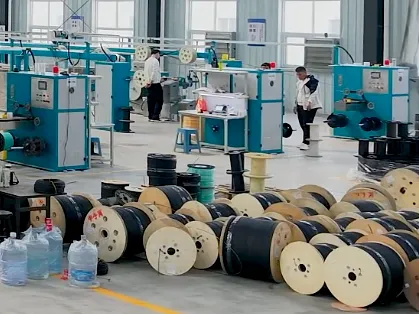
Factory Real Shot
Optical Fiber Coloring and Loose Tube Extrusion
The production workshop first colors the purchased bare optical fibers for subsequent identification. Then, the colored fibers are co-extruded with water-blocking fiber putty into PBT loose tubes to form optical fiber units. During the extrusion process, the outer diameter and wall thickness of the loose tube are precisely controlled, and water cooling and tension adjustment are performed online to ensure the fiber has a stable excess length inside the tube.
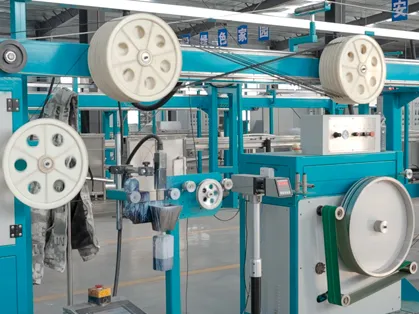
Loose Tube and Stranding Core Process
On the loose tube production line, 250μm colored fibers are co-extruded with water-blocking fiber putty into PBT (polybutylene terephthalate) loose tubes. After cooling and shaping, optical fiber units are formed. Subsequently, multiple loose tubes and an FRP (fiber reinforced plastic) central strength member are reverse-stranded using SZ stranding equipment, with water-blocking yarn or powder filled in to form a compact circular cable core. Stranding pitch and tension are precisely controlled by PLC to ensure uniform fiber excess length.
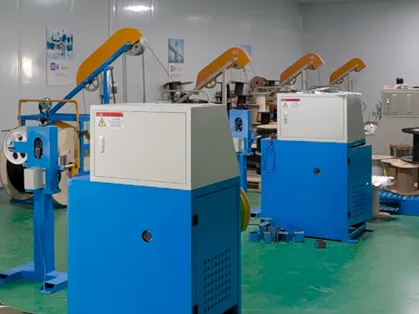
Sheath Extrusion and Armoring Layer Formation
The cable core first passes through an inner sheath extruder to coat a layer of polyethylene (PE) inner sheath, then enters the aramid armoring process: multiple aramid yarns are longitudinally or helically wrapped around the inner sheath surface under preset tension and pitch, serving as the main tensile element of the optical cable. Finally, an outer sheath is extruded— for ADSS-D optical cables, PE sheath is selected for voltages below 110kV, or electrically tracking resistant AT sheath for voltages above 110kV, with inline high-voltage spark testing to check sheath integrity.
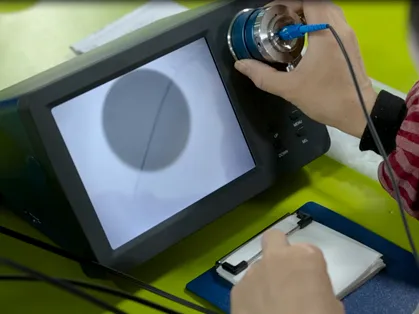
Online Testing and Finished Product Rewinding
The finished optical cable undergoes water cooling, drying, diameter measurement, eccentricity measurement, and tension control before entering the storage device for continuous winding and unwinding. Each reel of cable is tested for attenuation (OTDR) and mechanically spot-checked for performance (tension, bending, flattening, etc.). Qualified products are marked, weighed, sealed for moisture protection, and packaged for storage. The workshop maintains a constant temperature and humidity environment throughout, equipped with a dust filtration system to ensure fiber cleanliness.
Frequently Asked Questions & Quick Inquiry
ADSS-D Fiber Optic Cable FAQ
1. What is an ADSS double jacket fiber optic cable?
An ADSS double jacket cable is an aerial fiber optic cable designed with two protective outer sheaths for added strength, UV resistance, and durability. It is self-supporting and requires no metallic elements, making it ideal for installation near power lines.
2. What fiber types and core counts does it support?
This cable supports 2 to 288 cores, using G.652D or G.655 single-mode fibers. It's suitable for both backbone and access fiber networks.
3. What are the advantages of the double jacket structure?
The double jacket enhances the cable’s resistance to mechanical stress, UV radiation, and moisture ingress—especially important in long-span aerial applications and extreme weather conditions.
4. What is the typical span distance for this cable?
This ADSS cable can support aerial spans of up to 800 meters or more, depending on tension, sag, and environmental conditions. It’s ideal for rural and high-pole deployments.
5. Where is this cable commonly used?
Common applications include:
Overhead fiber deployment along power lines
Long-distance telecom backbones
FTTx networks in remote areas
Electric utility communication systems
Send Your Inquiry
Fill out the form below and we'll get back to you within 24 hours.
Related Articles
ADSS cable :Application of ADSS optical cable all-dielectric self-supporting in power communication system
2025-09-28
What is the price of ADSS optical cable? A comprehensive analysis of influencing factors and a purchasing guide!
2025-10-30